
Material Transfer & Conveying
Pneumatic Conveying
of Powders
Automate the transfer of powders between production areas over long distances and at high throughput rates. Reliable, clean and fully automated conveying, delivered as a turnkey solution.
VINCI Group / Actemium
30 Years of Bulk Handling Expertise
Turnkey Solution
ATEX Option Available
Looking to automate powder transfer between production areas over long distances and at high hourly throughput rates? pneumatic conveying meets these requirements while ensuring reliable, clean and fully automated material transfer.
Sofraden Bulk offers several technologies for transferring large quantities of powders over long distances, with full control of the process. We provide a turnkey solution, from engineering through to on-site installation. Each system is specified according to your target throughput, powder properties, available utilities and site layout constraints.
Dense Phase, Dilute Phase or Vacuum Conveying:
Which Technology Should You Choose?
We offer three main technologies, selected according to your conveying distance, throughput and installation constraints.
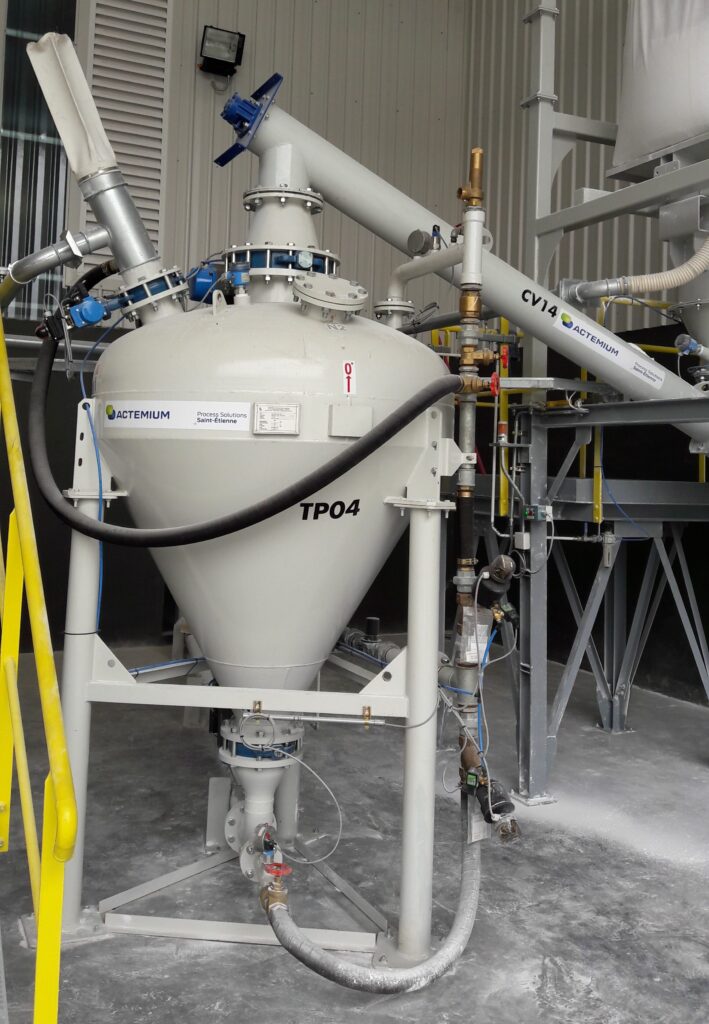
Dense Phase
Material is conveyed in batches or plugs using compressed air.
- Transfer in successive cycles
- Well suited to long distances
- Preferred for high conveying capacities
- The best-performing technology for long distances
Dilute Phase
Material is conveyed continuously, with upstream feed control and a blower providing the airflow.
- Continuous operation
- Cost-effective solution that limits the need for compressed air
- Suitable for consistent flow rates
Vacuum Conveying
Material is conveyed continuously by a vacuum pump that draws it from the receiving end.
- Ideal for complex plant layouts
- Safe and controlled transfer
- Suitable for sensitive environments
| Criteria | Dense Phase | Dilute Phase | Vacuum Conveying |
|---|---|---|---|
| Transfer Method | Batch transfer | Continuous (positive-pressure conveying) | Continuous (vacuum conveying) |
| Key Advantage | Long distances, high capacities | Cost-effective, steady flow rates | Complex layouts, sensitive environments |
| Air Supply | Compressed air | Blower | Vacuum pump |
What Makes Up a Pneumatic Conveying System
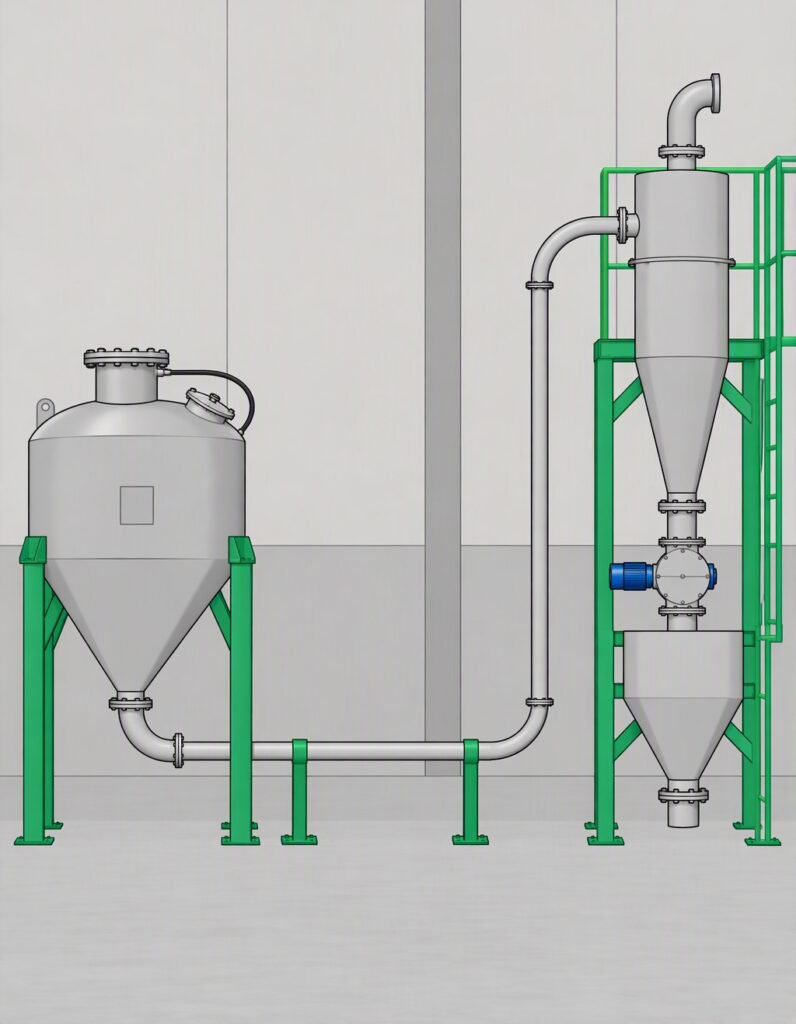
Whatever the technology selected, every installation comprises three main assemblies:
- Sending assembly — upstream
- Integrated pipework — transfers material between the two points
- Receiving assembly — downstream
The receiving end is always fitted with a hopper and integrated filtration to ensure a clean and safe environment.
Options for Your Pneumatic Conveying System
The process can be enhanced with advanced monitoring features.
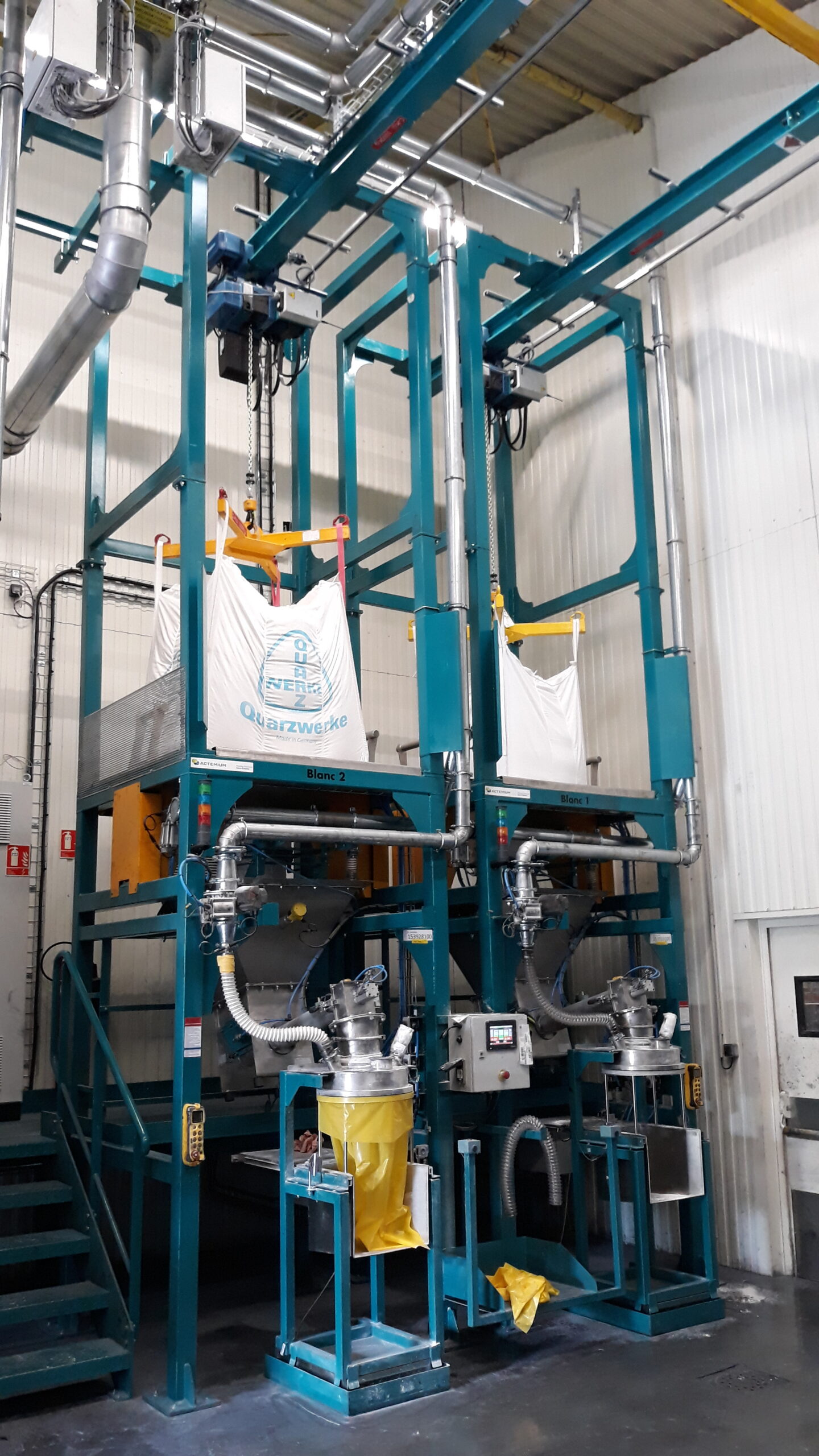
- Upstream and downstream weighing
- Leak detection
- Daily tonnage monitoring
- Automated downstream filling
- Multiple destinations
Technical Specifications of Our Pneumatic Conveying Systems
| Specification | Value |
|---|---|
| Hourly Throughput | Up to 90 t/h |
| ATEX Option | Available |
Custom-Designed Installations
We offer sending vessels, upstream hoppers and receiving hoppers in different sizes, designed around your target hourly throughput, space constraints and plant configuration. By carefully analyzing your requirements and materials, we deliver reliable, innovative solutions tailored to your application.
ATEX Option
Turnkey
Custom-Made
Where Pneumatic Conveying Is Used
Pneumatic conveying is designed for transferring powdered materials between production areas, particularly over long distances and at high throughput rates.
Materials: powders and powdered products
Applications: transfers between production areas, long distances, high hourly throughput, sensitive environments (vacuum conveying) and complex plant layouts
Design Your Pneumatic Conveying System with Sofraden Bulk
Engineering & Design
in-depth analysis of your requirements, materials and installation constraints
Turnkey Solution
from engineering through to on-site installation
Choosing the Right Technology
dense phase, dilute phase or vacuum conveying to suit your application
30 Years of Bulk Handling Expertise · After-Sales Service
Tell Us About Your Transfer Requirements. We’ll Design the Right System.
Hourly throughput, distance, powder characteristics, available utilities and space constraints: share your requirements and our team will get back to you with a technical assessment.
Frequently Asked Questions About Pneumatic Conveying
Dense phase conveying moves material in batches using compressed air, making it ideal for long distances and high capacities. Dilute phase conveying uses a blower for continuous, cost-effective transfer at steady flow rates. Vacuum conveying uses a vacuum pump for continuous transfer, particularly suited to complex layouts and sensitive environments.
Up to 90 t/h depending on the technology and configuration.
Yes, this is one of its main advantages. Dense phase is the best-performing technology for long-distance conveying.
An upstream sending assembly, conveying pipework and a downstream receiving assembly equipped with a hopper and integrated filtration.
Yes, an ATEX option is available.
Yes. Options include upstream/downstream weighing, leak detection, daily tonnage monitoring, automated downstream filling and multiple-destination control.


